
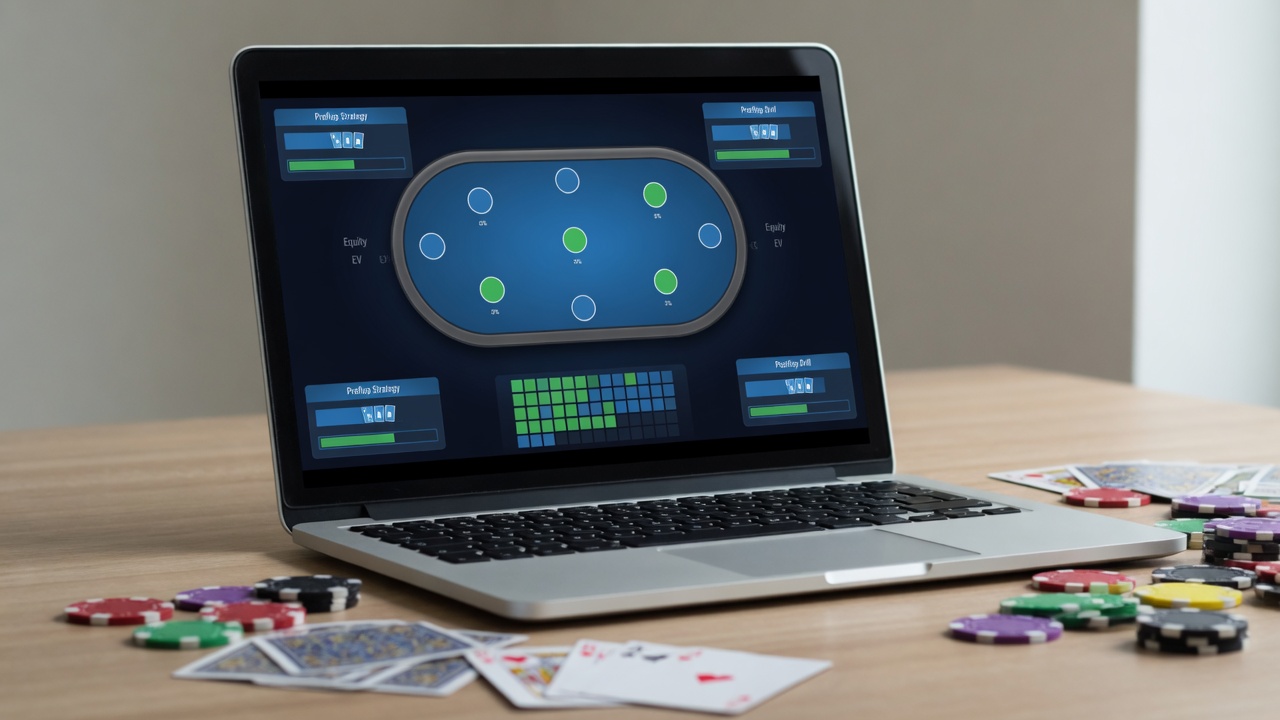
Introduction to Poker Trainer Odin
Poker Trainer Odin is a revolutionary poker software designed to elevate the skills of players at all levels. As an advanced training tool, it offers users a comprehensive platform to practice, analyze, and refine their poker strategies. Whether you are a novice trying to understand the basics or a seasoned player aiming to perfect your tactics, Poker Trainer Odin provides the essential resources to help you grow and succeed in the competitive world of poker.
Developed with the poker community in mind, this innovative poker software integrates cutting-edge technology with practical training exercises. Its primary purpose is to simulate real-game scenarios, allowing players to make decisions and learn from their mistakes without risking actual money. By doing so, Poker Trainer Odin creates an environment where players can build confidence and improve their decision-making skills under various conditions typically encountered in poker games.
One of the key features that set Poker Trainer Odin apart as a training tool is its adaptability. It tailors its training program to the unique playing style and skill level of each user, ensuring a personalized learning experience. This approach helps players focus on areas that need improvement while reinforcing their strengths, making their practice sessions highly efficient and effective.
Additionally, Poker Trainer Odin supports different poker variants, catering to the diverse interests within the poker community. Whether you are practicing Texas Hold’em, Omaha, or other popular versions, this poker software equips you with the insights and knowledge necessary to elevate your game. Its user-friendly interface and detailed analytics further enhance the learning process, offering clear feedback and actionable advice after each session.
In summary, Poker Trainer Odin is more than just a poker training tool—it is a comprehensive poker software solution that empowers players to master the game through consistent practice and strategic learning. Its development reflects the needs and aspirations of the poker community, making it an indispensable resource for anyone serious about improving their poker skills and achieving long-term success at the tables.
Features of Poker Trainer Odin
Poker Trainer Odin stands out in the realm of poker training software due to its comprehensive suite of features designed to enhance player skills at all levels. One of its most notable capabilities is the real-time assistance it provides during gameplay, enabling players to make educated decisions based on statistical probabilities. This feature significantly accelerates learning by allowing users to practice strategy in an interactive environment.
The software also boasts a detailed hand history analysis, which helps players review past hands, identify mistakes, and understand opponent tendencies. These insights are crucial for refining strategic thinking and improving overall performance. Additionally, Odin offers customizable training modules tailored to specific game types and skill levels, making it versatile for both beginners and experienced players.
Another key feature is the user-friendly interface which simplifies navigation and access to various tools, ensuring an efficient training experience without unnecessary distractions. The integration of multi-format poker variants further enriches the learning process by exposing players to diverse scenarios and strategies. Together, these software capabilities create a robust platform that supports continuous improvement, helping poker enthusiasts elevate their gameplay with confidence.
User Base and Popularity
Poker Trainer Odin has established itself as a widely embraced tool among poker players due to its tailored design for users ranging from beginners to advanced professionals. The user base predominantly consists of serious poker enthusiasts who are committed to enhancing their skills and strategies. This diverse demographic appreciates how the software adapts to different skill levels and provides personalized training that targets their specific needs.
The popularity of Poker Trainer Odin among poker players stems from its combination of user-friendly interfaces and sophisticated training algorithms. It offers real-time feedback and analytics that allow players to understand their mistakes and improve quickly. Furthermore, its ability to simulate real-game scenarios makes it a practical and accessible training tool, increasing its appeal to a broad spectrum of users.
Another factor contributing to its widespread use is the community and support system surrounding the tool. Poker players are continually sharing insights and tips, which enriches the learning environment. This social aspect, coupled with its high reliability and consistent updates, ensures that Poker Trainer Odin remains a go-to resource for those aiming to elevate their game. Its reputation for effectiveness is well-recognized, which naturally attracts a growing number of users.
Ultimately, the success of Poker Trainer Odin’s user base and popularity can be attributed to its ability to meet the evolving demands of poker players, providing them with a powerful, customizable, and engaging training experience.
What is RTA and Its Implications
Real-Time Assistance (RTA) in poker refers to the use of external tools and software that provide players with immediate advice or strategic guidance during live play. These tools analyze the current game situation, such as the cards on the table, opponents’ actions, and betting patterns, then suggest the optimal move based on pre-programmed algorithms or databases. The intention behind RTA is to improve decision-making accuracy, offering players a considerable advantage by reducing the need to rely solely on personal skill or intuition.
The concept of RTA has significant implications for both poker players and the industry as a whole. For players who use RTA tools, the technology can dramatically shift the competitive balance by providing instant, data-driven insights that would otherwise require extensive experience or study to obtain. While this can enhance a player’s performance, it also raises questions regarding fairness and the spirit of the game. The essence of poker traditionally lies in reading opponents, bluffing, and strategic thinking, all of which can be undermined by automated assistance.
From an industry standpoint, the prevalence of RTA tools challenges the integrity of online poker platforms. Casinos and poker rooms must now invest heavily in advanced security measures and robust detection systems to combat the potential exploitation enabled by RTA. Regulatory bodies also face the challenge of defining clear policies and penalties concerning the use of real-time assistance, balancing technological innovation with maintaining a fair competitive environment.
Moreover, the ethical considerations surrounding RTA are complex. While some argue that using real-time assistance is akin to using any legal advantage or studying strategy, others view it as a form of cheating that damages the trust between players and the legitimacy of the game. As a result, many poker communities and professional circuits explicitly ban RTA, reinforcing the value of skill and mental acuity over reliance on external aids.
In conclusion, RTA and its implications bring to light critical debates about poker ethics and the future of the sport. While the technology represents a leap forward in game analysis and player support, it simultaneously threatens to disrupt the foundational principles of poker. Navigating these challenges will require thoughtful regulation, vigilant enforcement, and ongoing dialogue among players, operators, and regulators to preserve the competitive integrity of poker.
How RTA Tools Work
Real-Time Assistance (RTA) tools operate by continuously monitoring the gameplay and providing instant feedback based on real-time data. These tools use advanced software operation techniques to analyze the current state of the game, evaluating possible outcomes and optimal moves as the player progresses. By leveraging real-time data, the software can recommend actions that maximize the player’s chances of success.
The core principle behind RTA tools is their ability to process large volumes of game-related information seconds before or during a player’s turn, ensuring that decisions are informed by up-to-the-moment insight. This immediate access to critical data allows players to adjust their strategy dynamically and make better-informed decisions in highly competitive environments.
RTA tools influence gameplay by acting as a silent coach, highlighting the best moves, suggesting when to fold or bet, and even alerting to potential risks. Their operation depends heavily on integrating seamlessly with the game to retrieve and interpret data without causing delays or interruptions. Consequently, players empowered by RTA tools often play more efficiently and effectively, benefiting from the software’s ability to reduce human error and cognitive overload.
As these tools evolve, they increasingly shape how poker and other strategic games are played, making real-time assistance an essential component for competitive players who want to stay ahead in the game.
Regulations and Controversies Around RTA
The use of Real-Time Assistance (RTA) tools in poker has sparked significant legal and ethical debates within the community. Poker regulations around the world vary widely, with many jurisdictions still grappling to define and implement clear rules targeting the use of such advanced software. While some online poker platforms outright ban RTA tools, considering them a form of cheating that undermines fair play, others have yet to update their policies to address this emerging technology adequately.
RTA controversies often center around the question of fairness. These tools analyze ongoing gameplay and suggest optimal moves in real-time, which can give users an unfair advantage over opponents who rely solely on their skills and intuition. Critics argue that this disrupts the integrity of the game, diluting the competition and alienating honest players. On the other hand, proponents claim that RTA tools can be used for training and improving one’s game when used responsibly and in non-competitive settings.
Current poker regulations are catching up as regulators and poker platforms attempt to strike a balance between technological progress and maintaining a level playing field. The ethical discourse around RTA tools reflects broader concerns about the impact of AI and automation on traditional skill-based games. As the debate continues, the poker community remains divided, with consensus still evolving on how best to ensure fair play while embracing innovation.
Poker Trainer Odin Now as an RTA Tool

The latest update to Poker Trainer Odin marks a significant milestone: it has now transformed into a full-fledged Real-Time Assistance (RTA) tool. This enhancement elevates the popular poker training software by integrating real-time strategic advice and support directly into gameplay. For users, the advent of Poker Trainer Odin RTA means a powerful, next-level experience that blends training with live decision-making assistance.
Previously known primarily for its comprehensive training modules, the new Poker Trainer Odin RTA update introduces a real-time overlay that analyzes gameplay as it happens. It instantly provides actionable advice tailored to the ongoing situation at the poker table. This level of integration allows players to make more informed decisions without leaving the game interface, dramatically improving both learning and performance in live or online poker sessions.
Among the new features, users will find advanced hand range analysis, situational odds calculation, and opponent behavior tracking, all accessible during gameplay. This represents a major poker tool update that combines the rich analytical capabilities of traditional training with the immediacy and practicality of RTA support. Such features enable users to react swiftly and strategically, leveraging data-driven insights to elevate their game beyond basic intuition.
What does this mean for players? First, it’s an invaluable resource for both beginners striving to grasp fundamental concepts quickly and experienced players seeking to refine high-level strategies. The Poker Trainer Odin RTA tool fosters a learning environment that’s both immersive and practical, making study sessions more closely aligned with actual gameplay scenarios. It bridges the gap between theoretical knowledge and in-the-moment decisions.
In sum, the Poker Trainer Odin RTA update delivers an all-in-one poker tool update that pushes the boundaries of online poker training platforms. By embedding powerful RTA capabilities, it offers users a dynamic edge in improving their skills, mastering poker strategies, and ultimately gaining a competitive advantage. For enthusiasts looking to stay ahead in the game, this transformation signifies a must-have tool in their arsenal.
New Functionalities Enabling RTA
The latest software update to Poker Trainer Odin introduces a suite of new features specifically designed to support real-time assistance (RTA) during poker games. These new functionalities bring a significant enhancement, allowing players to receive instant strategic recommendations while actively engaged in live play. By integrating RTA capabilities, Odin provides a real edge, enabling users to make better-informed decisions based on real-time data analysis and situational context.
Among the new features, Odin now boasts rapid hand evaluation tools that instantly assess the strength of various hands and suggest optimal moves tailored to the current game state. This dynamic advice is generated through advanced algorithms that process the evolving board, player tendencies, and bet sizing, ensuring that recommendations are contextually relevant. This is a departure from static training modules, as Odin delivers real-time feedback precisely when it matters most.
Additionally, the update introduces seamless integration with multiple poker platforms, allowing the software to analyze game data and provide RTA functionalities without manual input. This automation streamlines the user experience, reducing lag between action and feedback. The enhanced interface also supports customizable alerts and visual cues, making the software’s assistance more accessible and intuitive during fast-paced sessions.
Overall, these new features position Odin not just as a training tool but as a powerful aid in live poker games. The combination of real-time data processing, platform integration, and user-friendly design marks this software update as a substantial leap forward in effective poker training and playing, empowering users to elevate their game with cutting-edge RTA functionalities.
Impact on Players and Poker Community
The introduction of Poker Trainer Odin as a real-time assistance (RTA) tool has sparked considerable debate across the poker community. From the player perspective, this shift significantly alters the gameplay experience, as users now have access to instantaneous strategic advice that can enhance their decision-making and potentially improve their win rates. This development challenges traditional skill-based play, raising questions about the true measure of a player’s ability and effort.
On the platforms hosting poker games, the impact is twofold. They face increased pressure to implement robust detection systems to identify and manage the use of RTA tools, ensuring fair play for all participants. Some platforms might even revise their rules or policies to address the ethical concerns linked to these tools, which inevitably affects their operational approach and player trust.
The broader poker community has reacted with mixed feelings towards this technological shift. While some see Poker Trainer Odin and similar tools as innovative instruments that can help players learn and improve more rapidly, others perceive them as undermining the spirit and ethics of poker. The debate around poker ethics is intensifying, centering on whether the use of these tools constitutes cheating or an evolution in how the game is played. This tension highlights the ongoing struggle within the community to balance technological advances with the preservation of fair competition and respect for the game’s traditional values.

I’ve been exploring online casinos for years, always on the lookout for the best bonuses and hidden gems. Writing reviews and guides lets me share the strategies I’ve honed and help fellow players make smarter choices.