
What Is Blackjack Basic Strategy
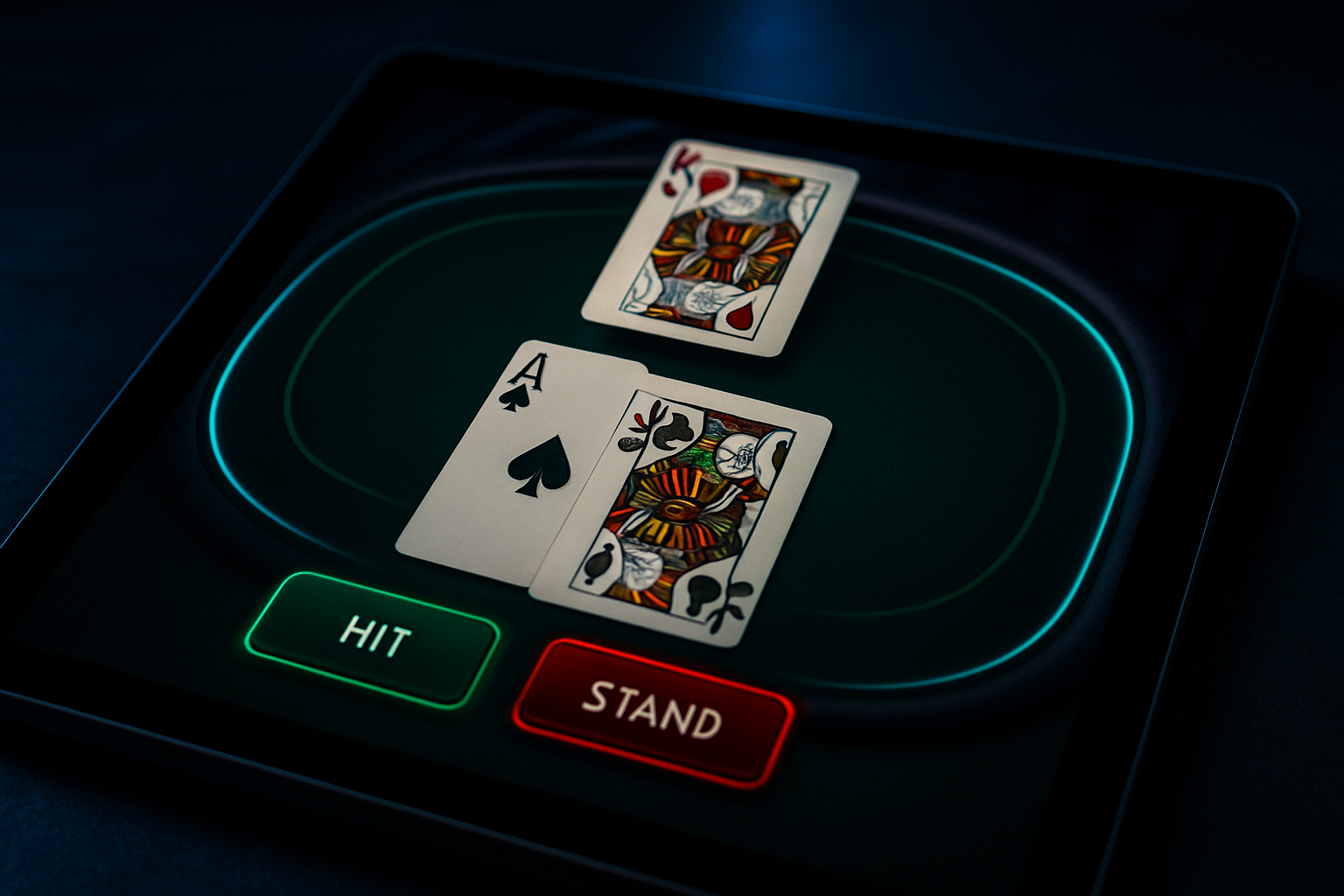
Blackjack basic strategy is the mathematically optimal way to play each hand in blackjack to minimize the house edge over time. Developed through rigorous mathematical analysis and computer simulations, this approach provides players with the exact decisions needed for every possible situation at the blackjack table. Whether you hold a pair of sevens or a soft 18, the strategy tells you precisely what to do based on the dealer’s upcard.
Embracing blackjack basic strategy means moving beyond gut feelings and adopting a data-driven method. This shift is crucial because even small errors compound over hundreds of hands, eroding your bankroll faster than necessary. With proper use, the house edge reduction can be dramatic, turning blackjack into a game where skilled play makes a real difference.
One of the top casino blackjack tips is to always consult or memorize a basic strategy chart before playing. These charts are customized for different rule variations and number of decks. Following them ensures you never misplay a hand, which is key to achieving consistent house edge reduction and extending your playing sessions.
The benefits extend beyond immediate outcomes. Players who master blackjack basic strategy report greater enjoyment since they feel in control. It eliminates the frustration of poor decisions and focuses on long-term profitability. House edge reduction becomes achievable through disciplined adherence rather than chance.
Practice is vital. Use online simulators to drill the moves until they are instinctive. This preparation allows seamless application in real casino environments, where distractions are common. Ultimately, blackjack basic strategy combined with other casino blackjack tips leads to superior results and measurable house edge reduction.
Essential Blackjack Rules for Strategy
Understanding the blackjack rules is essential for anyone looking to apply basic strategy at the tables. Blackjack gameplay revolves around achieving a hand value as close to 21 as possible without going over, while also beating the dealer’s hand. The casino table rules set the parameters for how the game unfolds, including betting limits and payout structures that can affect strategic choices during every round.
In terms of card values, each card from 2 through 10 is worth its numerical face value. Face cards such as jacks, queens, and kings are valued at 10 points each. Aces are unique because they can count as either 1 or 11, providing flexibility that players must consider when deciding on actions like hitting or standing. This dual value for aces often leads to soft hands that require different strategic considerations compared to hard hands, directly shaping basic strategy recommendations.
Dealer actions follow specific guidelines outlined in the casino table rules. The dealer is required to hit on totals of 16 or lower and stand on 17 or higher. This predictable behavior allows players to make informed decisions based on the dealer’s visible card and the overall composition of their own hand, helping to minimize the house edge over extended play.
Players have several options that directly influence their strategy. They can choose to hit and receive another card to try and improve their total, stand to keep their current hand without risking a bust, double down by doubling the wager and receiving exactly one more card which is ideal in favorable situations, or split two cards of the same value into two separate hands each starting with one of the original cards. Each option carries risks and rewards that basic strategy charts help navigate effectively across different scenarios.
For example, doubling down is often recommended when the player has a total of 10 or 11 and the dealer shows a weak upcard like 2 through 6. Splitting pairs like aces or eights can turn a mediocre hand into two potentially strong ones, though splitting tens is usually avoided. These decisions are rooted in the core blackjack rules and the flow of blackjack gameplay at any given casino. By internalizing these aspects, players can better adapt their approach to different casino table rules variations, ultimately improving their chances of success over time through disciplined play and consistent application of strategy.
Hard Hand Basic Strategy Chart
Mastering the hard hand strategy is essential for any player looking to reduce the house edge in blackjack. This basic strategy chart focuses exclusively on blackjack hard totals from 8 through 17, providing card-by-card guidance against every dealer upcard. Following these recommendations ensures optimal play in every situation involving hard hands.
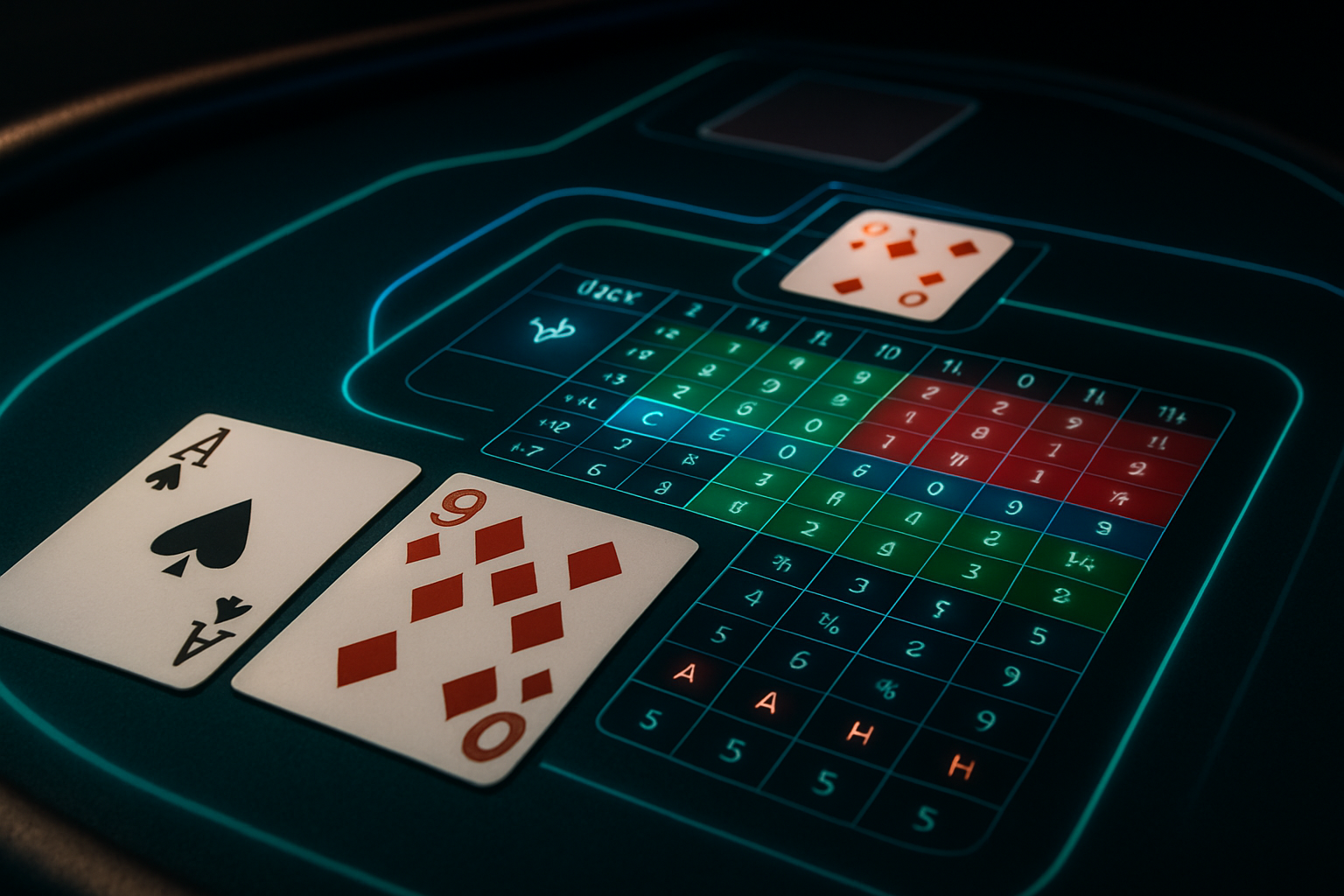
When your blackjack hard totals equal 8 or less, always hit regardless of the dealer’s upcard. This aggressive approach in the hard hand strategy prevents standing on weak totals that lose too often. For a hard total of 9, double down against dealer upcards 3 through 6 and hit against all others, including 2 and 7 through ace.
Blackjack hard totals of 10 offer strong doubling opportunities. Double against dealer upcards 2 through 9 and hit only when the dealer shows 10 or ace. A hard total of 11 is even more powerful; double against every dealer upcard from 2 through 10 and hit solely versus an ace. These moves form the foundation of any reliable basic strategy chart.
With blackjack hard totals of 12, stand against dealer upcards 4, 5, or 6 and hit against 2, 3, and 7 through ace. Hard totals 13 through 16 follow a similar pattern: stand when the dealer shows 2 through 6 and hit against 7 through ace. Never stand on these hard hands versus strong dealer cards, as the hard hand strategy prioritizes hitting to improve your total.
Finally, always stand on a hard total of 17 or higher. This rule completes the basic strategy chart for hard hands and protects your strong position against any dealer upcard. Consistently applying this hard hand strategy for all blackjack hard totals delivers the mathematically correct decisions that maximize long-term results.
Soft Hand Basic Strategy Chart
Mastering soft hand strategy is essential for any player looking to reduce the house edge in blackjack. Soft hands, also known as blackjack soft totals, occur whenever an ace is counted as eleven, giving you ace hand strategy options that allow flexibility without the risk of an immediate bust. The following card-by-card breakdown covers optimal plays for every soft total from ace-2 through ace-9 against each dealer upcard.
With soft 13 (ace-2), hit against dealer 2, 3, 4, 7, 8, 9, 10, or ace. Double down only when the dealer shows 5 or 6. Soft 14 (ace-3) follows nearly the same pattern: hit versus 2-4 and 7-ace, while doubling remains the best ace hand strategy move against 5 or 6.
Soft 15 (ace-4) and soft 16 (ace-5) expand the doubling range slightly. Both totals call for a double against dealer 4, 5, or 6 and a hit in all other situations. These decisions illustrate why soft hand strategy rewards aggressive doubling when the dealer is vulnerable.
Soft 17 (ace-6) is another key blackjack soft total. Double down versus dealer 3 through 6, then hit against 2 and 7 through ace. Moving to soft 18 (ace-7), the ace hand strategy becomes more nuanced: double versus 3-6, stand versus 2, 7, or 8, and hit against 9, 10, or ace.
Soft 19 (ace-8) is almost always a stand in multi-deck games, though some charts allow a double against a dealer 6. Finally, soft 20 (ace-9) is a mandatory stand against every dealer upcard because the total already sits at a powerful 20. Applying these soft hand strategy rules consistently helps players maximize returns on all blackjack soft totals.
Pair Splitting Basic Strategy
Mastering blackjack pair splitting is essential for every player seeking an edge at the table. When to split pairs follows precise rules based on your two cards and the dealer upcard. Basic strategy pairs charts simplify these decisions so you never guess during a hand.

Always split aces and eights. Splitting aces creates two powerful starting totals of eleven or twelve, while splitting eights rescues you from the weak total of sixteen. These moves apply against any dealer upcard.
Split twos and threes against dealer two through seven. Never split them against eight, nine, ten, or ace. The same guideline applies to sixes, which you split against two through six only. These choices turn marginal hands into stronger opportunities.
Basic strategy pairs recommend splitting sevens against dealer two through seven. This move builds two totals of seven that perform well against weak dealer cards. Against eight or higher, stand instead.
Never split fours, fives, or tens. Keeping fours together allows a possible double down later, while fives form a strong ten total perfect for doubling. Tens already total twenty, one of the best hands in blackjack. Splitting any of these reduces your expected value.
Split nines against dealer two through six and eight or nine. Stand against seven, ten, or ace. This selective approach maximizes returns when the dealer is vulnerable. When to split pairs becomes automatic once you memorize these matchups.
Always follow the complete basic strategy pairs chart during play. Combine blackjack pair splitting decisions with proper hitting and standing rules for maximum effectiveness. Consistent application lowers the house edge and improves long-term results.
Tips for Using Basic Strategy Effectively
To apply basic strategy effectively, commit to it in every situation at the blackjack table. This means following the recommended actions for each card combination without letting emotions or superstitions interfere. Consistency is key to reaping the benefits of reduced house edge over extended play periods at both online and land-based casinos.
Memorizing the extensive charts can seem daunting at first, but a systematic approach works wonders. Divide the chart into sections like hard hands, soft hands, and pairs. Practice one section per day and test yourself frequently to build retention and accuracy in decision making under pressure.
Blackjack practice tips include using online trainers and mobile apps designed specifically for this purpose. These resources simulate real-game conditions, allowing you to make decisions quickly and receive immediate feedback on your choices to correct mistakes promptly before real money is involved.
Common casino strategy mistakes often stem from ignoring rule variations or failing to adjust for the specific game being played. Always verify the chart matches the casino’s rules, such as whether the dealer stands or hits on soft 17, to ensure optimal play and avoid unnecessary losses.
Strategy cards and apps serve as excellent aids when playing at online or land-based casinos. They provide instant guidance, helping you avoid errors during live play. Remember to use them discreetly in physical casinos to maintain a smooth experience and avoid any issues with casino staff while still referencing correct moves.
Another key tip is to review the strategy chart before each session to refresh your memory. This quick review can prevent lapses that lead to poor decisions when the action starts, keeping your focus sharp throughout the session.
By following these guidelines, players can master basic strategy and improve their overall performance. Regular practice ensures that the correct moves become second nature, leading to more successful sessions at the tables and better bankroll management in the long run.

I’ve been exploring online casinos for years, always on the lookout for the best bonuses and hidden gems. Writing reviews and guides lets me share the strategies I’ve honed and help fellow players make smarter choices.